Eighteen months ago the AI conversation in real estate media was about whether generative image editing would replace photographers. It did not. What has actually happened is quieter and more interesting: AI has reshaped the seam between capture and delivery, where the marginal hour of operator time used to live. The downstream effects on quality, compliance, and economics are still settling.
This is the read we share with enterprise media leadership when they audit their AI exposure. Some of the changes are durable improvements that should be standardized. Some are liability vectors that should be governed before they compound. The two are not always easy to tell apart.
Where AI clearly helps
Five workflows where the case is strong and the operational return is measurable.
QA against the deliverable spec
Vision models can verify the shot list against the spec before the deliverable reaches marketing. Every interior room captured, every required exterior angle, the right number of HDR brackets per scene. Catching a missing shot at QA is a fifteen-minute fix; catching it three days after the listing went live is a half-day reshoot. The platform runs the QA pass; the operator gets a structured exception list, not a vague rejection.
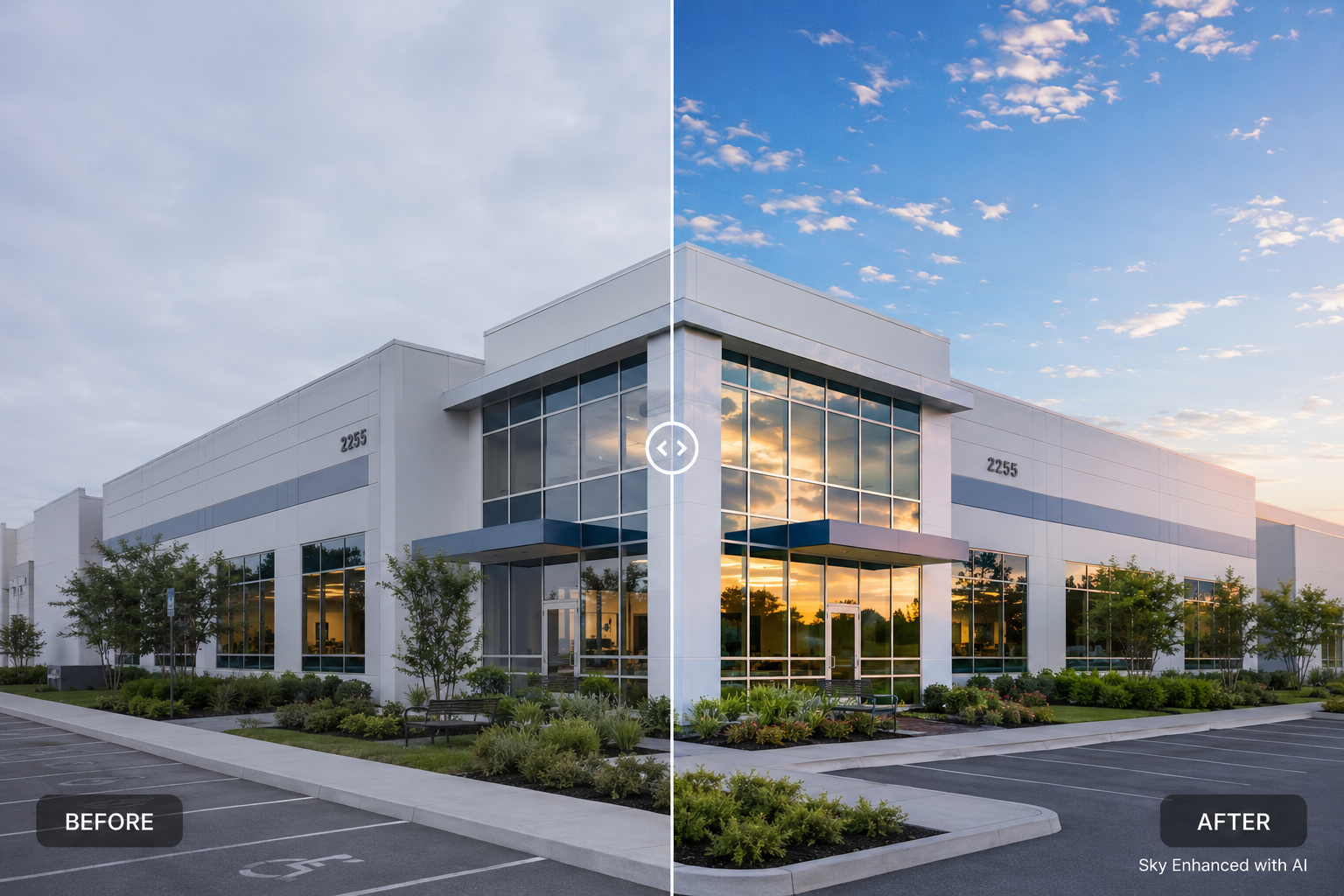
Sky and lawn enhancement
Replacing an overcast sky or repairing a patchy lawn used to be a per-image post-processing task. The current generation of generative image edits handles both within the spec, with a consistency that lets the platform enforce a brand-wide look without operator variability. The rule that matters is that these edits are labeled in the asset library so the marketing team and the listing agent know which images are enhanced versus straight captures.
Virtual staging on vacant listings
Empty rooms photograph badly, sell slowly, and almost always underperform staged comparables. Physical staging is expensive and slow. Virtual staging, when it carries the local MLS-required disclosure, produces measurable lift on days-to-offer and offer-to-list ratios for vacant properties. The compliance bar is the watermark and the listing-page disclosure; the operational bar is that the edits do not alter structural features.
Listing-description drafting
AI can draft a competent first-pass listing description from the photos, the listing data, and the brokerage’s style guide. It is not a replacement for the agent’s eye, but it compresses the per-listing copy time by 60 to 80 percent with operator review. The constraint is that the operator review is not optional: AI-drafted copy carries factual errors at a rate that consistently surprises new adopters.
Routing and scheduling optimization
Vendor routing across a multi-market pool is a textbook optimization problem. Operator availability, performance score, geographic clustering, equipment match. AI-driven routing produces 15 to 25 percent capacity uplift over manual routing on the rollouts we have measured. The platform is the right place to run this; the office is not.
AI in real estate media earns its place where the workflow was already operational and repeatable. It struggles, and sometimes harms, in workflows that are creative, judgmental, or have a disclosure dimension.
Where AI is doing more harm than good
Three patterns that should be governed out of the program before they compound.
Generative edits that alter listed features
Moving a window for better composition. Removing a power line from an exterior shot. Generating a view from the primary bedroom that does not exist on the actual property. These edits create disclosure liability the moment the buyer notices the discrepancy on an in-person showing. The repair cost is reputational, not technical. Several jurisdictions have begun requiring disclosure of any AI-generated content in listing imagery, and the trend is one-way.
Unreviewed AI-generated copy
AI drafts of listing descriptions, neighborhood notes, and property history pull from training data that does not reliably reflect the current state of the property. Square footage drift, school district errors, and feature-count mistakes are common. Without operator review, these errors ship and surface during inspection or due diligence. The cost is small per listing and meaningful in aggregate.
Undisclosed virtual staging
Several major US MLSes (Bright MLS, REcolorado, NWMLS, and others) require explicit virtually-staged disclosure on any image that adds, removes, or substantially alters furnishings. An AI-staged image deployed without the local disclosure is a compliance violation. The MLS enforcement environment is still uneven, but the trajectory is consistent: more enforcement, not less.
What enterprise AI governance looks like
Three rules cover ninety percent of the exposure. We codify these into the workflow on every enterprise rollout.
- Labeling. Every AI-assisted edit is recorded in the asset library metadata with the edit type, the operator who approved it, and the timestamp. The library is the audit trail.
- Operator review. Every AI-generated text deliverable (listing descriptions, neighborhood notes, social copy) passes through operator review before publication. The platform blocks the publish action when the review status is not green.
- Disclosure enforcement. Virtually staged images carry the MLS-required watermark before they reach the listing platform. The platform enforces watermark attachment at delivery, not at the operator’s discretion.
What is coming in the next twelve months
Three trajectories worth tracking on the enterprise side.
Capture-side AI
AI moves from post-processing into the capture device itself. Real-time HDR exposure suggestions, automated shot-list completeness checks before the operator leaves the property, and on-device de-distortion are landing in the next twelve months. The operational lift is meaningful: shoots come back cleaner the first time, which compresses the QA loop.
Listing-page generation
Fully AI-generated listing pages (hero copy, image sequencing, social cutdowns, neighborhood summary) from a single capture session. The technology is close. The compliance and brand-consistency frameworks needed to deploy it across a multi-market brokerage are not. We expect uneven adoption, with leaders moving faster than followers and the compliance gap widening before it closes.
Disclosure-driven differentiation
The brokerages that get governance right will use it as a differentiator. “Every AI-assisted image on every listing is labeled and auditable” is a sellable position with both consumers and regulators. The brokerages that lag will find themselves cleaning up enforcement actions in markets where the MLS does start enforcing.
The AI question for enterprise brokerages in 2026 is not which tool to adopt. It is what to govern, what to enforce, and what to label so the program survives the disclosure environment that is coming.
How to audit your current AI exposure
Three questions surface the program risk in under an hour.
- What AI-assisted edits are happening today in our media program, and which ones are labeled in our asset library?
- Who reviews AI-drafted copy before it publishes to the MLS or the listing platform, and what is the bypass rate?
- Where are we deploying virtually staged imagery, and which MLS jurisdictions require disclosure that we are or are not attaching?
The answers produce an exposure map. The map drives governance design. AssetOSX runs this governance layer across enterprise brokerages on the platform; the implementation framework is summarized on the about page.