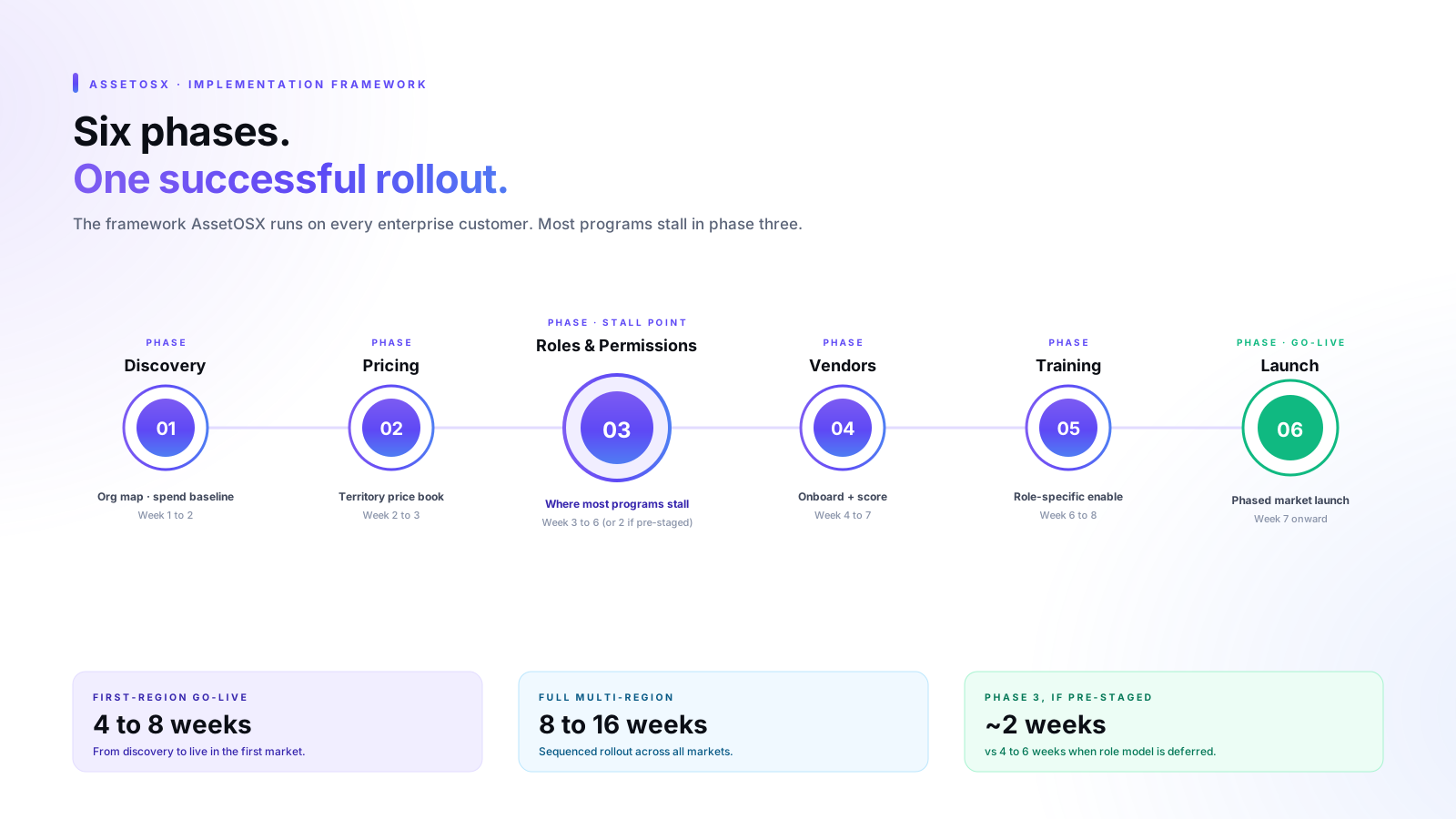
Every enterprise real estate tech rollout we have run lands the same way when it works, and stalls in the same place when it does not. The framework below is the one we walk every new enterprise customer through during discovery. It is six phases long. Most programs underestimate the third one and spend twice as long as needed there.
The framework applies to media operations rollouts specifically (the kind of program AssetOSX delivers), but the structure generalizes to any enterprise platform rollout across a multi-office brokerage, landlord, or portfolio manager.
Phase 1: discovery and organizational mapping (weeks 1 to 2)
Map the current state. Every office, every region, every vendor relationship, every media service in active use, every cost-center hierarchy, every approval chain. The artifact is a single document that answers: who orders what, who pays for it, how does it get approved, and where does the asset land. Most enterprise customers learn things about their own operation in this phase that no one inside the organization had previously seen written down.
The deliverable is signed off by an executive sponsor with visibility across the affected offices and finance. Without sign-off, the rest of the framework has no defensible baseline.
Phase 2: pricing and territory configuration (weeks 2 to 3)
Translate the current vendor pricing across markets into a published per-service, per-market price list inside the platform. Markets where pricing variance is high get normalized to a defensible territory price. The output is a price book finance can sign off on.
This phase is mechanical and fast when the discovery document is clean. It is painful when discovery left pricing variance unaudited. The fastest rollouts have finance lead this phase, not procurement.
Phase 3: roles and permissions setup (weeks 3 to 6)
This is the phase that catches most programs out. Discovery and pricing produce visible artifacts that get signed off. Roles and permissions cuts across organizational political lines: who can approve what spend, whose budget the cost center hits, who can override a SLA, who can re-route a vendor assignment, who can see what data. Each one is a decision with stakeholders.
Phase three is where rollouts stall not because the technology is hard, but because the org chart has not been forced to make decisions that the old spreadsheet quietly avoided. The platform forces them.
Programs that pre-stage the role model during phase one, with the executive sponsor flagging the political lines ahead of time, move through phase three in two weeks. Programs that defer the role conversation until the platform is being configured spend four to six weeks unsticking decisions that should have happened earlier.
Phase 4: vendor network onboarding (weeks 4 to 7)
The existing vendor relationships move into the platform, with the spec, the territory pricing, the SLAs, and the performance scoring infrastructure attached. Gaps in coverage get filled from the vetted national vendor network during onboarding so no market launches under-served. Phase four can run in parallel with phase three; both depend on phases one and two but not on each other.
Phase 5: training and team enablement (weeks 6 to 8)
Office managers, marketing coordinators, listing agents, and finance approvers get trained on the platform workflows for their role. Training is role-specific, not generic. The marketing coordinator who books most shoots needs a different training session than the office manager who approves spend. Generic training produces generic adoption, which translates to spreadsheet reversion inside a quarter.
Phase 6: phased market launch (weeks 7 onward)
First market goes live with full platform replacement of the spreadsheet (read-only archive, not deletion). Two-week adoption support window with daily check-ins from the AssetOSX implementation lead. Once the first market is stable, the second and third markets launch on a rolling cadence. Full multi-region deployment typically completes in 8 to 16 weeks total elapsed time.
Three failure modes worth flagging
Beyond the phase three stall, three patterns kill rollouts.
- Big-bang launch. Going live across all markets simultaneously. The platform looks underadopted in every market at once and leadership pulls back. Phased launch is sequenced for a reason.
- Spreadsheet parallel running. Both the old and new system live in parallel. Offices pick whichever is easier. The new system loses the bookings that matter most.
- Training without role specificity.Generic training for everyone. Per-role workflows go unmastered. Adoption skews to the heaviest users and atrophies at the edges.
AssetOSX runs this six-phase framework on every enterprise rollout. The framework is summarized on the enterprise FAQ and detailed during the first scoping call. Earlier posts in this series cover the audit framework and the spreadsheet-to-platform transition that this framework operationalizes.