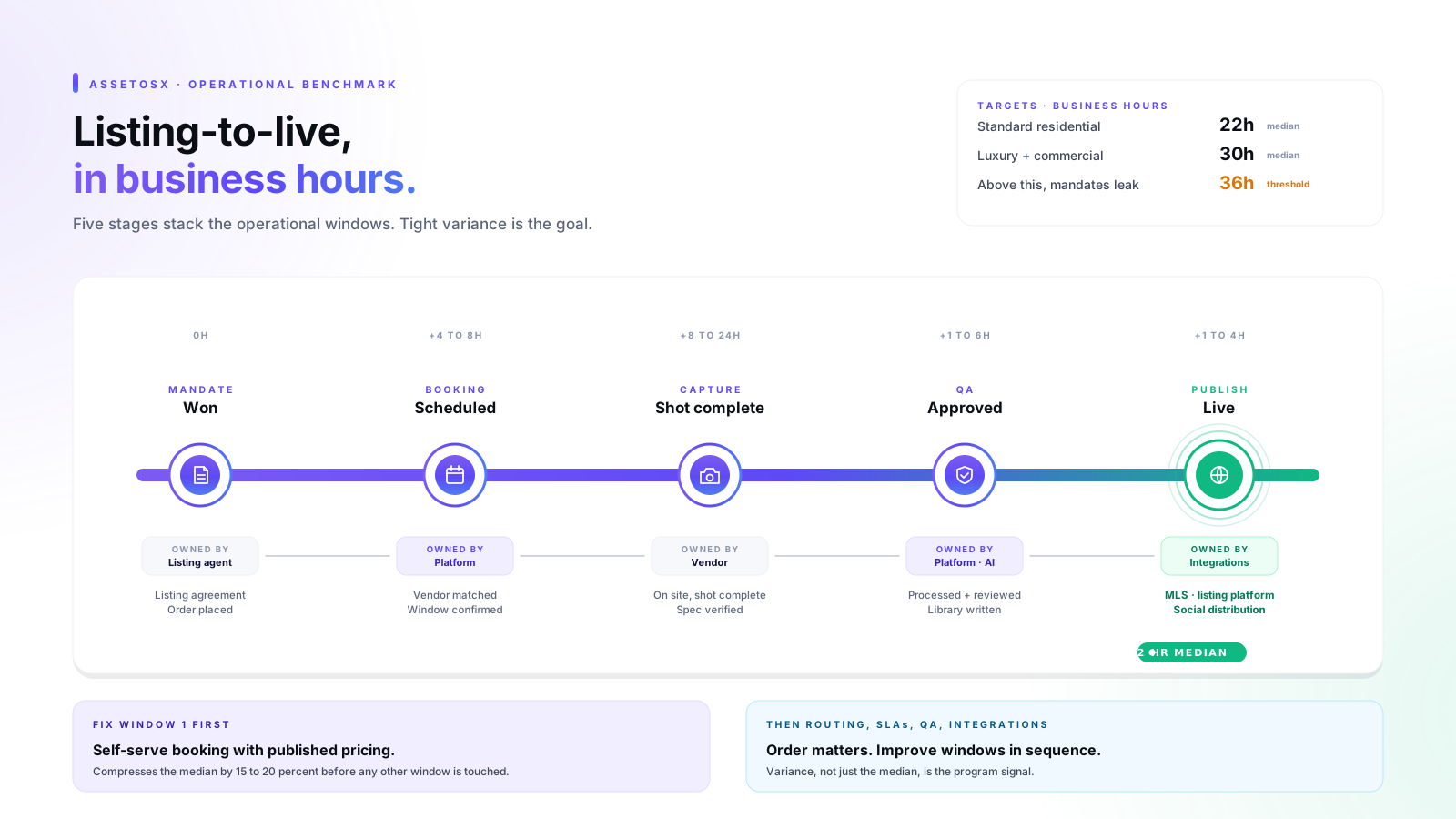
The single most useful operational metric for an enterprise media program is listing-to-live: the elapsed business hours from won mandate to live listing with the agreed media attached. Every upstream and downstream delay stacks into this one number. Programs that measure it improve. Programs that do not, drift.
This is the benchmarking framework we use across enterprise engagements. The numbers below are the medians and the percentile spreads we have measured across multi-office residential and commercial brokerages in the US and Canada over the past three years.
The benchmark, by segment
Three segment benchmarks. Each is expressed in business hours (9am to 6pm local, weekdays). The variance band matters more than the median: a brokerage with a 22-hour median residential but a 90th-percentile listing-to-live of 72 hours is losing the listings where speed matters most. Tight variance is the goal.
Where the hours actually hide
Listing-to-live stacks five operational windows in sequence. Improving the median requires improving the windows in order; trying to compress window five while window two is loose is wasted effort.
Window 1: mandate to booking (typical median: 4 to 8 business hours)
From the moment the listing agreement is signed to the moment the media shoot is booked in the platform. The delays here are usually procedural: the agent finishes paperwork, the marketing coordinator catches the email, the booking goes into the system. This window compresses sharply when self-serve booking is unlocked: the agent books the shoot directly without the coordinator intermediary.
Window 2: booking to shoot (median: 8 to 24 business hours)
From booking to the operator arriving on site. The constraint is operator availability and the seller’s property-ready timeline. Capacity in the vendor pool, the routing algorithm’s ability to find the best-matched operator, and the seller’s flexibility on the shoot window all determine this median. Tight pools and weak routing produce long windows.
Window 3: shoot to delivery (median: 10 to 24 business hours)
From shoot completion to edited deliverables ready for upload. This is the SLA we covered in the vendor SLA piece. Photography typically clears in 24 to 48 hours; 3D and video stretch the window. Programs that enforce the delivery SLA in the workflow hold the median; programs that leave it in the contract drift.
Window 4: delivery to QA (median: 1 to 6 business hours)
From delivery to QA-approved status. AI-assisted spec QA compresses this window dramatically: most enterprise programs that have rolled out automated QA report this window dropping from 4 to 6 hours down to under 1. The spec-violation exceptions still get a human review; the clean deliveries skip the human entirely.
Window 5: QA to live (median: 1 to 4 business hours)
From QA approval to the listing being live on the MLS, the listing platform, the brokerage website, and the social cutdowns. Integration depth matters: every manual upload is an hour the listing is not live. Brokerages that have invested in MLS push-back and listing-platform integrations report this window in single-digit minutes.
Listing-to-live is not won in one window. It is won by keeping every window short and the variance tight, every time, across every market.
What to fix first when listing-to-live is too long
The temptation is to attack the longest window. Usually that is window two (booking-to-shoot) because operator availability looks like the obvious constraint. In our engagements that is rarely the right starting point. The right starting point is window one.
Window one compresses with a single platform change: self-serve booking with published pricing. The agent books the shoot in the platform the moment the listing agreement signs. The four to eight hours of procedural delay drop to ten minutes. That single change usually pulls the median listing-to-live down by 15 to 20 percent before any other window is touched.
From there, the order of leverage is consistent: improve routing in window two, enforce SLAs in window three, deploy AI QA in window four, and integrate listing platforms in window five. Done in that order, the median compresses steadily without the program flailing.
How to measure listing-to-live in your program
Three measurement disciplines produce a defensible median.
- Stamp every transition. Mandate signed, booking created, shoot started, shoot completed, delivery uploaded, QA approved, listing live. Every transition is a timestamp in the platform.
- Report business hours, not calendar days.Subtract overnights, weekends, and observed holidays from the elapsed clock. Calendar days hide the real operational performance.
- Segment by listing type. Residential standard, residential luxury, commercial leasing, multifamily. The medians and the benchmarks differ; the program performance is only meaningful when segmented.
AssetOSX runs the listing-to-live measurement layer across every enterprise customer. The benchmarks above come directly from that data. The full implementation framework is on the about page, and the underlying operational sequence is covered in the six-phase rollout framework.