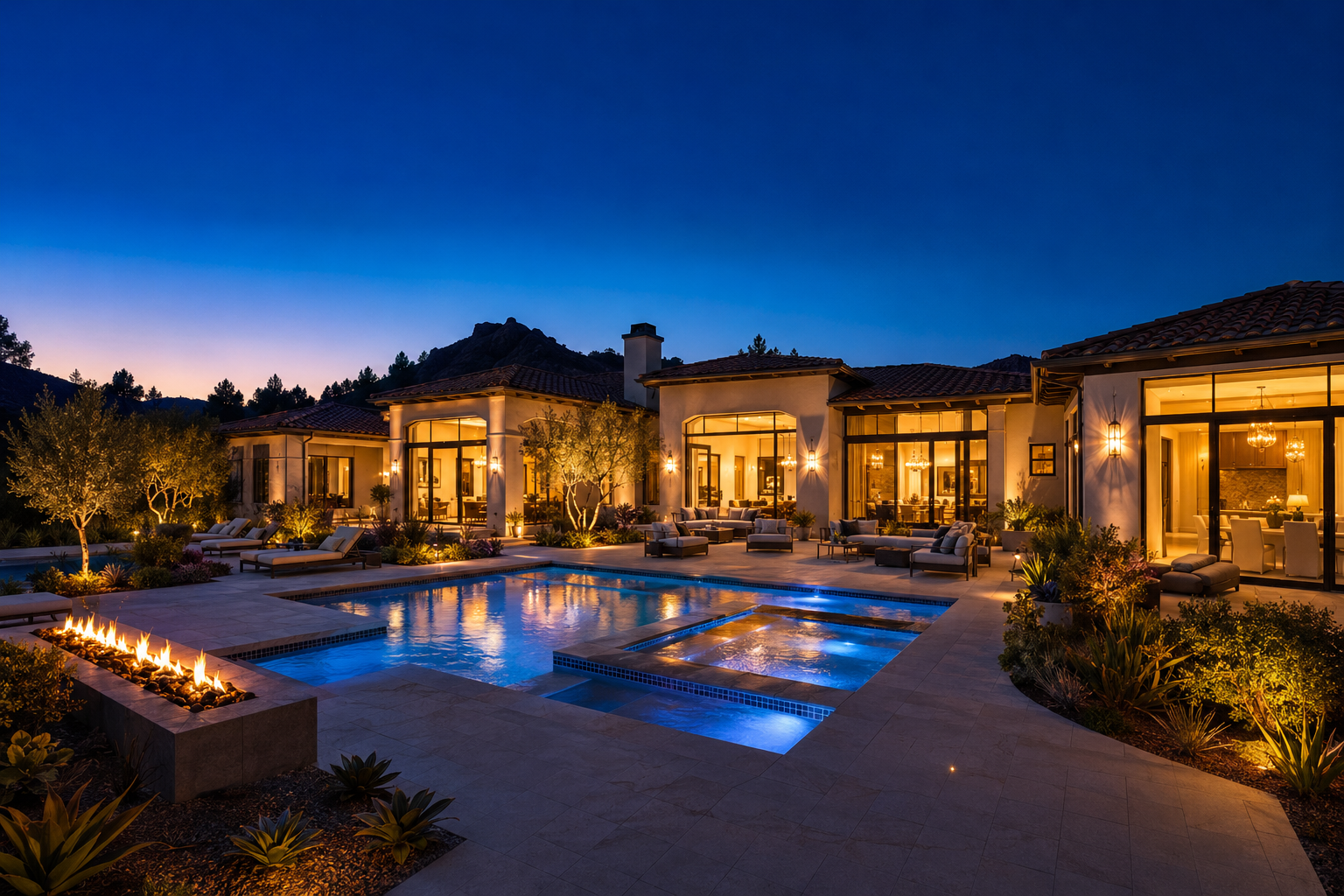
Twilight photography is one of the most-ordered services in the enterprise media catalog and one of the least-measured. On the right listing it produces the hero frame that doubles click-through on the search-results page. On the wrong listing it produces a slightly moodier version of the daytime exterior at twice the cost. The difference between the two is not technique. It is the listing.
This is the framework we walk enterprise customers through when twilight spend looks high relative to listing-level conversion lift. The right twilight program is smaller than most brokerages currently run, and the spec is tighter than most vendors deliver.
Where twilight earns its cost
Three listing categories where the conversion lift on twilight is consistent and material across our portfolio data.
Luxury residential, $1.5M and above
At this price point the buyer pool is shopping on mood, not just price-per-square-foot. A twilight hero with warm interior glow, landscape lighting, and a deep blue sky reframes the listing from a transaction to an aspirational object. We see median click-through-rate lift of 35 to 60 percent on the primary listing card relative to a daytime exterior on comparable luxury inventory.
Commercial assets where lighting is the pitch
Office lobbies with curtain-wall glass, retail facades with active signage, and amenitized multifamily exteriors where the building’s ambient lighting is part of the leasing argument. Twilight captures the lit-from-within quality that is invisible at noon. On these assets the twilight hero is not optional, it is the marketing.
Water-frontage and skyline-context properties
Anywhere the listing’s relationship to a body of water, a marina, or a city skyline is a meaningful part of the value proposition. Twilight extracts the reflection and the sky color that daytime flattens. The cost-to-conversion ratio on these is some of the best in the catalog.
Twilight does not work on every listing. It works on listings where the buyer is making a mood-driven decision, and the hero frame has to do the emotional lifting before the buyer will click through to the gallery.
The twilight spec that holds across markets
The five-element spec that turns twilight from a vibes exercise into a repeatable enterprise deliverable.
- Capture window. 25 to 35 minutes after local sunset. Earlier and the sky is still too bright; later and the contrast is too high to recover interiors.
- Frame count. 3 to 5 hero exteriors per listing, all with full HDR brackets (5 to 7 exposures) so the editor can pull detail from shadows and highlights.
- Light staging. Every interior light on, landscape lighting active, pool lights on if present, street furniture removed or repositioned, garage doors closed unless specifically called for.
- Backup civil-twilight set. Capture a parallel set 5 to 10 minutes earlier in case the primary window cloud-blows. The marginal time cost is twenty minutes; the reshoot cost if the primary fails is a full revisit.
- Delivery format. RAW + retouched JPEG, color-graded to the brokerage’s twilight LUT so the look is consistent across markets and operators.
Routing twilight in an enterprise program
Twilight is technically distinct from daytime exterior. The same operator who shoots strong daytime stills does not automatically produce strong twilight, and routing as if they do is how programs end up with inconsistent twilight quality across markets.
Three routing rules close the gap.
- Twilight category in the performance score.Score operators on twilight deliveries separately from daytime. Restrict twilight routing to operators above the threshold on that specific category.
- Publish the surcharge. Twilight should be a published premium over the standard exterior, visible at booking. The listing agent making the call against the spec sees the cost ahead of time, not after the invoice.
- Auto-flag misordered twilight. A twilight booking on a $650k listing in a non-water market is a misorder. The platform should surface that to the office manager at booking time, not after the shoot.
The anti-pattern: blanket twilight on every luxury listing
Some programs default to twilight on every listing above an arbitrary price threshold, regardless of the property’s actual fit for the technique. A north-facing condo twentieth-floor unit in a glass tower has no twilight value; the hero is daytime with city context. A street-level townhouse on a heavily-treed lot has no twilight value either; the canopy kills the sky.
Twilight on the wrong listing is twice the cost for the same hero. Twilight on the right listing is the difference between a click-through and a scroll-past.
The enterprise governance question is not whether to offer twilight. It is whether to enforce the right-listing check at booking. That check lives in the platform, in front of the listing agent, before the operator is dispatched.
AssetOSX runs this twilight routing and spec layer for enterprise customers across the US and Canada. The marketplace catalog and the routing model are referenced on the enterprise FAQ and the broader media-strategy framework lives in our 3D capture piece.